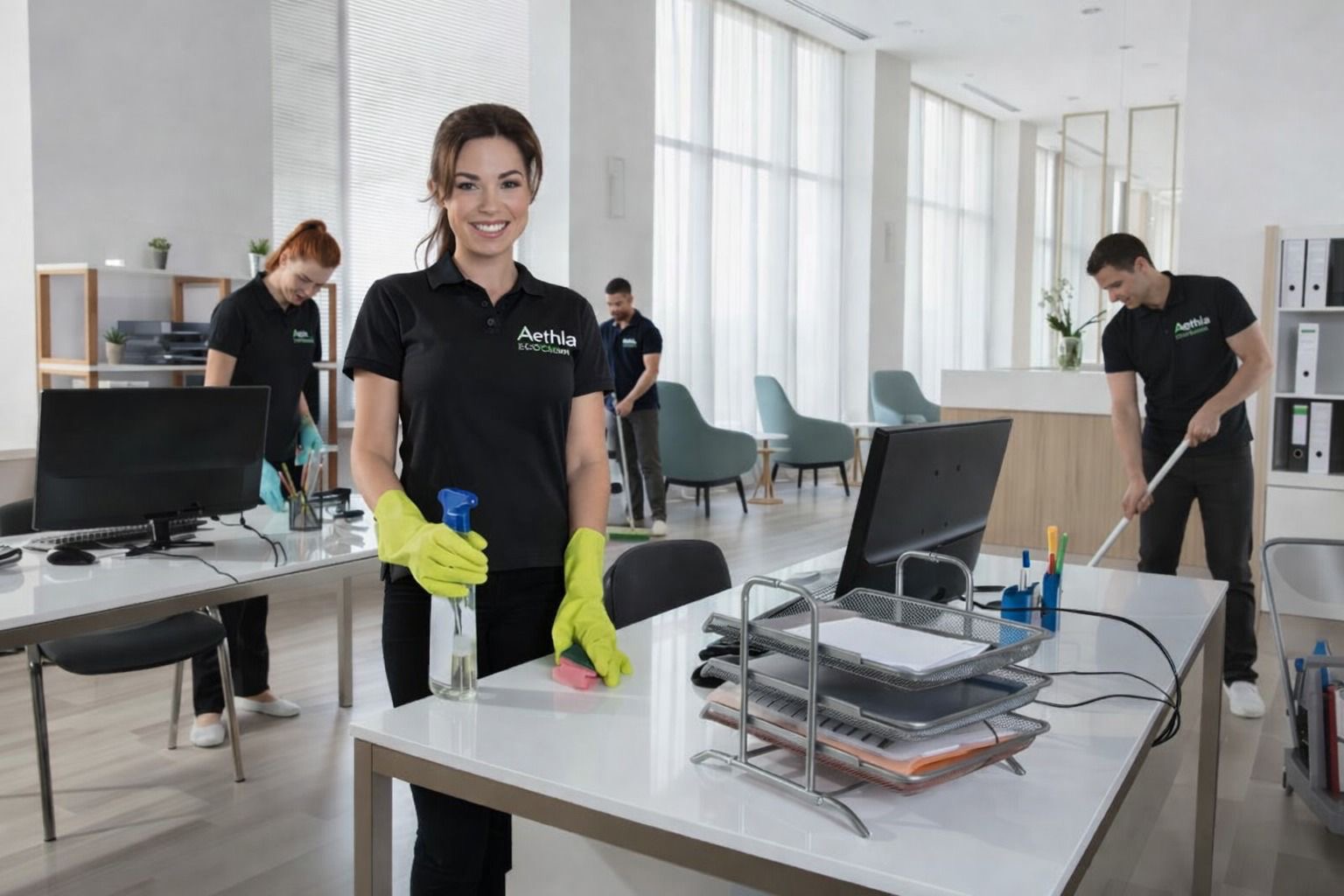
Brisbane's warm, humid climate is wonderful for outdoor living and tough on indoor surfaces. Moisture lingers in bathrooms and wardrobes, mould and mildew can build up faster than in cooler cities, storms push dirt and leaves through open louvres, and a large share of the city rents, often in apartments with their own rules. This guide explains how bond cleaning works in Queensland, how to cope with humidity and mould, how apartment and body corporate cleaning differs from house cleaning, and how to choose a cleaner in Brisbane.
Written by the Aethla EcoClean team. Last updated October 2026.
Quick answer
Bond cleaning is the Queensland term for an end-of-lease clean. It should follow your agent's checklist and your entry condition report, and it covers the cleanliness side of the inspection only. No cleaner can guarantee your bond. For everyday cleaning, Brisbane's humidity means bathrooms, wardrobes and window tracks need regular attention to keep mould from taking hold.
Key takeaways
- Bond cleaning is the Queensland name for an end-of-lease clean. Follow your agent's checklist and compare the property with your entry condition report.
- Bonds in Queensland are lodged with the Residential Tenancies Authority (RTA). Disputes can go through the RTA's dispute resolution service and then to QCAT.
- Humidity drives mould and mildew. Clean damp spots often, ventilate, and fix the moisture source, not just the stain.
- Apartments bring building access, lift bookings and body corporate rules. Tell your cleaner early.
- A professional clean covers cleanliness only. It cannot repair damage or guarantee a bond result.
- We clean homes and apartments across Brisbane, including the CBD, South Brisbane, Fortitude Valley, New Farm and the suburbs.
What is bond cleaning in Brisbane?
Bond cleaning is the Queensland name for an end-of-lease clean. When a tenancy ends, the tenant is generally expected to return the property in the same condition as at the start, allowing for fair wear and tear, and that includes leaving it clean. A bond clean is a thorough, room-by-room clean aimed at that standard. You will also hear it called vacate cleaning or exit cleaning, and elsewhere in Australia it is usually called end-of-lease cleaning.
It differs from a regular clean in three ways. It is more detailed, covering areas that routine cleans skip, such as inside ovens, window tracks and light fittings. It follows a checklist, usually your agent's. And it is done to a deadline, because the keys have to go back on a set date. You can read more on our end-of-lease cleaning page, or see our overview of cleaning services in Brisbane.
How bonds work in Queensland
Tenancies in Queensland are governed by the Residential Tenancies and Rooming Accommodation Act 2008. Your rental bond is lodged with the Residential Tenancies Authority (RTA), not held by the agent or landlord. When you move out, the bond is refunded through the RTA, and if you and the lessor or agent agree on how it will be split, the process is straightforward. If you do not agree, the RTA offers a dispute resolution service, and unresolved disputes can go to the Queensland Civil and Administrative Tribunal (QCAT).
At the start of the tenancy you should receive an entry condition report that records the state of the property. At the end, the property is compared with that report. This is why photos and the report matter: they are the evidence that shows what was there originally. The rules are updated from time to time, so check the RTA's website for the current requirements before you move out. A cleaning company can help with the cleaning, but it cannot give legal advice about your bond.
The bond clean checklist, room by room
Every agent has their own list, so always ask for yours. This table shows what most Brisbane bond cleans cover and where the common problems lie.
| Area | What is usually expected | Where problems often arise |
|---|---|---|
| Kitchen | Benchtops, sink, splashback, cupboards inside and out, oven, stovetop, rangehood, dishwasher, fridge if included | Baked-on oven grease, rangehood filter, grime at the back of the stovetop |
| Bathrooms and toilets | Shower, bath, screen, taps, basin, vanity, toilet, mirrors, floor | Mould on silicone and grout, soap scum on screens, limescale on taps |
| Bedrooms and living areas | Floors, built-in wardrobes, skirting boards, doors, light fittings, switches, walls spot-cleaned | Dust on top of wardrobes, marks on walls, cobwebs in corners |
| Windows and tracks | Glass cleaned inside, tracks, sills and frames wiped; louvres where fitted | Dust and insects in tracks, dirty louvre blades |
| Laundry | Tub, benchtop, cupboards, floor | Lint and mould behind and beside machines |
| Carpets and floors | Vacuumed and mopped; professional carpet clean where the lease or agent requires it | Stains, pet odour, marks near doorways |
| Outdoor areas | Balcony, patio, entry and garage swept; cobwebs removed | Mould on outdoor walls, dirty doormats, bins |
Items outside this list, such as lawn mowing, garden beds or rubbish removal, are usually the tenant's job and are not part of an interior clean. Ask your agent for a list and send it to your cleaner when you book.
A bond clean timeline
- Four weeks before: check your lease, your entry condition report and the notice you have given. Ask the agent for their cleaning and inspection requirements.
- Two to three weeks before: book your cleaner. Ask whether they return to fix points raised at inspection.
- The week before: arrange removalists, remove belongings and take away rubbish. Rooms must be empty so every surface can be reached.
- The day before or the day of: your cleaner cleans the property. Provide access and your agent's checklist.
- After the clean: walk through, take dated photos of every room, and fix any small things you can.
- Handover: return all keys and keep proof of when and to whom.
- Afterwards: respond promptly to any list from the agent, and ask for specific items in writing.
Try not to schedule your clean for the same day as the inspection if you can avoid it. If something is missed, you want time to fix it.
Why bond claims get disputed
Most disputes come down to a handful of causes, and many can be avoided:
- Cleaning that did not meet the agent's expectations, often in ovens, bathrooms and carpets.
- Damage beyond fair wear and tear, such as holes, burns, broken fittings and large stains.
- Unclear starting condition because the entry condition report was incomplete or never returned.
- Missing items or keys that were not handed back.
- Gardens and outdoor areas left in a worse state than at the start.
- Disagreement about fair wear and tear, such as faded paint or worn carpet in a long tenancy.
Keep your original condition report, take your own photos at move-in and move-out, and keep receipts for professional cleaning. If you receive a claim you disagree with, the RTA's dispute resolution service is the next step. A cleaner cannot argue the case for you, but a receipt and a checklist are useful evidence.
A Brisbane cleaning calendar: wet season and dry season
Brisbane's year is better described as a wet, humid season and a drier, milder one than as four neat seasons. Cleaning priorities shift between them.
| Time of year | Conditions | Cleaning priorities |
|---|---|---|
| Wet season (roughly November to March) | Hot, humid, frequent storms | Bathrooms, silicone and grout; window tracks and louvres; wardrobes and laundry for damp; air conditioner filters; storm debris on verandahs and entries |
| Early autumn (April) | Humidity eases, still warm | Reset after the wet season: deep clean, wash curtains and covers, check for mould in cupboards and behind furniture |
| Dry season (roughly May to September) | Mild, dry days, cool nights | Carpets and rugs (they dry faster), windows inside, a deep clean of kitchens and ovens, outdoor furniture |
| Spring (October) | Warming up, humidity returns | Prepare for the wet season: clear gutters and verandahs, clean exhaust fans and air conditioner filters, clean bathroom silicone |
A simple plan is a deep clean at the end of the wet season and another before the next one starts, with a regular clean in between.
Humidity, mould and mildew in Brisbane homes
Brisbane has a humid subtropical climate, with warm, wet summers and frequent storms. Humidity matters for cleaning because mould and mildew need three things: moisture, a food source such as dust, soap scum or paint, and warmth. In Brisbane, the first and last are often present, so the best defence is to remove the food and reduce the moisture.
Where mould shows up first
- Shower silicone, grout and the bottom of shower screens
- Window tracks and the corners of windows and louvres
- The backs of wardrobes and the walls behind furniture against external walls
- Ceilings above showers and in poorly ventilated bathrooms
- Laundry areas and the seals of washing machines
- Air conditioner vents and filters
A routine that works
- Run the bathroom exhaust fan during and for 20 to 30 minutes after showers, or open a window.
- Squeegee shower screens and wipe wet surfaces.
- Wash bath mats and towels often and let them dry fully.
- Leave wardrobe doors slightly open, and keep furniture a few centimetres off external walls.
- Clean air conditioner filters regularly. A dirty filter can circulate spores.
- Clean visible mould early with a suitable product, using gloves and good ventilation.
When mould is not just a cleaning problem
If mould returns within days of cleaning, or covers large areas, the cause is probably moisture that cleaning cannot fix: a leak, a lack of ventilation or rising damp. In a rental, tell your agent in writing. Do not sand or disturb large areas of mould yourself, and see a doctor if anyone in the home has breathing problems. We clean mould from surfaces as part of our services, but we cannot repair the cause.
Common bond cleaning mistakes
- Not asking for the agent's checklist. Cleaning to your own standard is not the same as meeting theirs.
- Leaving the oven, rangehood and bathrooms to the end. These take the longest and are inspected the most.
- Booking the clean on the day of the inspection. There is no time to fix anything that is missed.
- Cleaning before the removalists. Moving furniture drops dust and marks floors, so clean after everything is out.
- Forgetting window tracks, sliding door runners and louvres.
- Ignoring marks on walls. Some can be wiped, some need touching up with matching paint.
- Not taking photos. Dated photos of every room are your best evidence.
- Not checking your lease for carpet cleaning. Many leases require it.
- Believing a guarantee. No cleaner controls the inspection result.
Cleaning a Queenslander and older homes
Brisbane's older timber homes, including the traditional high-set Queenslander, have charm and some specific cleaning needs.
- Timber floors: sweep, then mop with a well-wrung mop and a cleaner made for sealed timber. Excess water can damage boards.
- Louvres: each blade collects dust and insects. Clean them with a damp cloth or a purpose-made louvre cleaner, one at a time.
- Verandahs: sweep and wash regularly. Leaf litter and damp mark timber and encourage mould.
- Beaded walls and ceilings: dust with a soft brush or microfibre cloth. Water and scrubbing can lift old paint.
- Cupboards and pantries: older cupboards may have gaps where insects enter. Clean and keep food in sealed containers.
- Under-house areas: these are generally not part of an interior clean.
Apartment cleaning and body corporate rules
A large share of central Brisbane lives in apartments, in areas such as the CBD, South Brisbane, Fortitude Valley, New Farm, Kangaroo Point and West End. Apartment cleaning is similar to house cleaning, with extra planning.
What to arrange before the clean
- Building access: how will the cleaner get in? Provide fobs, codes and the front desk or building manager's details.
- Lift bookings: many buildings require a booking for moves and sometimes for tradespeople.
- Working hours: body corporate by-laws can limit noisy work and trades to certain hours, and some buildings have rules about weekends.
- Parking and loading: tell the cleaner where to park and how to bring equipment in.
- Balconies: check whether balconies and balcony glass are included in your agent's checklist.
In Queensland, the Body Corporate and Community Management Act 1997 governs community titles schemes, and each scheme has its own by-laws. If you are unsure of the rules, ask your body corporate manager. External glass on high-rise buildings generally needs specialist access equipment and approval, which is outside regular home cleaning. See our apartment cleaning page.
Storm season, dust and what we do not do
Brisbane's storm season brings heavy rain, wind and sudden temperature changes, and it can push leaves, dirt and water through open windows and louvres. After a storm, the cleaning job usually involves wiping down sills, tracks and floors, washing curtains if they got wet, and drying everything properly to stop mould.
The city has also experienced serious floods, in January 2011 and again in February and March 2022. Flood-damaged homes need specialist assessment and restoration, with safety checks, drying, and sometimes licensed trades, before ordinary cleaning makes sense. We are a regular cleaning service. We do not do flood restoration or insurance remediation. Once a property has been made safe and dry, we can help with the cleaning that follows. For storm and flood preparedness and recovery, see official sources such as the Brisbane City Council and the Queensland Government.
Student rentals and shared houses
Brisbane has a large student population around the University of Queensland, QUT and Griffith University, and shared houses are a common way to live. Cleaning in a shared house works best when everyone knows what they are responsible for.
- Agree the standard early. Decide how often each shared area is cleaned and who does what.
- Keep a chore roster and a shared supply list.
- Split the cost fairly. If you hire a professional for a bond clean, agree in advance how the cost is divided among tenants.
- Take photos together. At move-in and at move-out, so the record is clear.
- Allow for staggered departures. If tenants leave on different dates, agree who organises the final clean.
If you tell us the number of bedrooms and bathrooms and send the agent's checklist, we can quote for the whole property.
Regular and deep cleaning in Brisbane
Outside of moving out, most Brisbane households choose between a regular clean and a deep clean.
- A regular clean maintains a home that is already in good order. In Brisbane, a weekly or fortnightly rhythm keeps bathrooms and kitchens fresh and gives mould less chance to establish. See regular cleaning.
- A deep clean resets a home. It adds skirting boards, door frames, window tracks, inside cupboards and appliance detail, and is a good first step before a regular schedule. See deep cleaning.
- A move-in clean prepares an empty property before you unpack. See move-in cleaning.
For a seasonal rhythm, a deep clean at the start of the wet season (before humidity peaks) and another after it (to reset surfaces) work well.
Carpet cleaning and floors
Carpet in a humid climate needs particular care, because moisture slows drying and can encourage odour and mould. A few points help:
- Choose a cleaner that uses controlled water, good extraction and drying equipment.
- Open windows, run fans or air conditioning and keep foot traffic off until the carpet is dry.
- Vacuum regularly, especially in entries and near doors.
- Treat spills immediately by blotting, never rubbing.
Hard floors such as tile and sealed timber respond to regular sweeping and damp mopping, and should not be saturated. See our carpet cleaning page.
Eco-friendly cleaning explained
Eco-friendly cleaning uses products that are gentler on people and the environment, such as plant-derived ingredients, fewer harsh chemicals and less strong fragrance. There is no single legal definition, so labels and third-party certifications matter. In Australia, schemes such as Good Environmental Choice Australia (GECA) certify some cleaning products.
In a humid, closed-up home, indoor air quality is affected by what you spray and wipe. Eco-friendly products can be a good choice for children, pets and people with allergies or asthma. They are not "less effective": technique, contact time and the right cloth do much of the work. Tell your cleaner about sensitivities and what to avoid, and we will follow your instructions.
DIY or professional bond clean?
You can do a bond clean yourself, and many people do. The trade-off is time, equipment and risk.
- DIY suits a small, well-kept unit where you have time, the right products and a clear checklist.
- A professional suits larger properties, tight deadlines, tenants moving interstate, and homes with heavily soiled ovens, bathrooms or carpet.
- A mix works too: clean the obvious areas yourself and book a professional for the oven, bathrooms and carpets.
If you do it yourself, work top to bottom, use separate cloths for each area, and do not mix chemicals. Never combine bleach with ammonia or acid-based cleaners.
How to choose a cleaner in Brisbane
Ask these questions before you book anyone, including us:
- Is the quote in writing, for my specific property and agent's checklist?
- What is included, and what costs extra?
- Do you return to fix points raised at inspection, and what is the time limit?
- Do you hold public liability insurance?
- Are your cleaners employees or contractors?
- What products and equipment do you use?
- How do you handle apartment access, lift bookings and parking?
- What is your cancellation and rescheduling policy?
- Can you work around my timeline and the agent's inspection?
- Can you share recent, genuine feedback from other Brisbane clients?
Be wary of guarantees about your bond, prices far below the rest, requests for full payment up front and vague answers about insurance.
What affects the cost of cleaning in Brisbane?
- Size: the number of bedrooms, bathrooms and living areas
- Condition: how long since the last thorough clean, and any mould or heavy build-up
- Type of clean: bond, deep or regular
- Extras: carpets, windows, balconies, ovens, fridges and garages
- Access and timing: apartments with building rules, tight deadlines and weekend or after-hours work
- Frequency: a regular schedule is easier to plan and often costs less per visit
To get an accurate quote, send the number of bedrooms and bathrooms, the property type, your agent's checklist, your vacate date and any extras. Photos help for homes in poor condition.
Areas we service in Brisbane
We provide cleaning services across Brisbane, including the Brisbane CBD, South Brisbane, Fortitude Valley, New Farm, West End, Kangaroo Point, St Lucia, Toowong, Indooroopilly, Chermside, Sunnybank and Carindale. If your suburb is not listed, contact us and we will confirm whether we can come to you. See our Brisbane cleaning services page for the full list.
Frequently asked questions about cleaning and bond cleaning in Brisbane
What is bond cleaning in Brisbane?
Bond cleaning is the Queensland name for an end-of-lease clean: a thorough clean of a rental property when the tenancy ends, so it can be handed back in the condition the tenancy rules expect. It is also called vacate cleaning or exit cleaning. It focuses on the areas agents inspect, such as the kitchen, bathrooms, floors, windows and fittings.
Does a professional bond clean guarantee I will get my bond back?
No. A professional clean covers the cleanliness part of the inspection, but the decision about your bond is made by your property manager or landlord and, if there is a dispute, through the Residential Tenancies Authority process. Be wary of anyone who promises a full bond refund. What a good provider can do is clean to your checklist and tell you about anything that needs repair.
How much does bond cleaning cost in Brisbane?
It depends on the size of the property, the number of bathrooms, its condition, any extras such as carpets or windows, and how soon you need it. Because those vary, we quote for your property and your agent's checklist. Send us the details and we will give you a clear price in writing.
What do agents check at a bond clean inspection?
Agents usually compare the property with the condition report from the start of the tenancy and work through the kitchen, bathrooms, floors, windows, walls, cupboards, light fittings, doors and outdoor areas. Common problem areas are the oven, rangehood, grout, window tracks, skirting boards and carpets.
Do I need to clean the carpets when I move out?
Many Brisbane leases and agent checklists ask for professional carpet cleaning, particularly if the property had clean carpet at the start. Check your lease and your agent's list. We offer carpet cleaning as a separate service that can be combined with a bond clean.
How do I deal with mould in a humid Brisbane home?
Clean mould off hard surfaces with an appropriate product, dry the area, and fix what is causing the moisture: ventilation, leaks and condensation. Mould that keeps returning after cleaning usually points to a moisture problem that needs your landlord or a tradesperson. Run exhaust fans, open windows when it is dry and keep air moving in wardrobes.
Can you clean apartments in the Brisbane CBD, South Brisbane and Fortitude Valley?
Yes. We clean apartments and units across Brisbane. Tell us about building access, lift bookings, parking and any body corporate rules when you book, so we can plan the visit and arrive at the right time.
Do you clean the outside of high-rise windows?
External glass on high-rise buildings usually needs specialist access equipment and building approval, which is outside regular home cleaning. We clean accessible internal glass and can discuss other windows when you contact us.
How far ahead should I book a bond clean?
Book as soon as you know your vacate date, ideally two to three weeks ahead. Dates around the end of the month and the start of semester are busiest. Booking early also gives you time to fix anything that the clean reveals.
What happens if the agent says something was missed?
Ask the agent for the specific items in writing, and contact your cleaner straight away. Ask us before you book whether we return to fix points raised at inspection, so you know what to expect.
Are your products eco-friendly and safe for pets and children?
Yes, we use eco-friendly products. If someone in your household has allergies or sensitivities, or you have a pet, tell us when you book and we will plan around it.
Do you clean after storm damage or flooding?
No. Flooded or storm-damaged homes need specialist assessment and restoration, and sometimes licensed trades. Once a property has been made safe and dry, we can help with the cleaning that follows, but we are a regular cleaning service, not a restoration company.
Can you clean student rentals and shared houses?
Yes. Tell us the number of bedrooms and bathrooms and the condition of the house. Shared houses are common near the University of Queensland, QUT and Griffith, and a clear checklist helps everyone share the cost fairly.
How do I book a clean in Brisbane?
Book online at aethlaecoclean.com.au/booking, or call or WhatsApp +61 412 107 313. We confirm bookings quickly by WhatsApp or phone.
About Aethla EcoClean
Aethla EcoClean is an eco-friendly cleaning company providing home cleaning, deep cleaning, end-of-lease cleaning, move-in cleaning, carpet cleaning and commercial cleaning. We service Brisbane, as well as Perth, Shepparton and Tatura. You can book online at https://www.aethlaecoclean.com.au/booking, call or WhatsApp +61 412 107 313, or email hello@aethlaecoclean.com.au. Opening hours are Monday to Sunday, 7:00am to 5:30pm.
Sources and further reading
Rules and conditions change, so check the official source before you rely on anything here. This guide is general information, not legal advice.